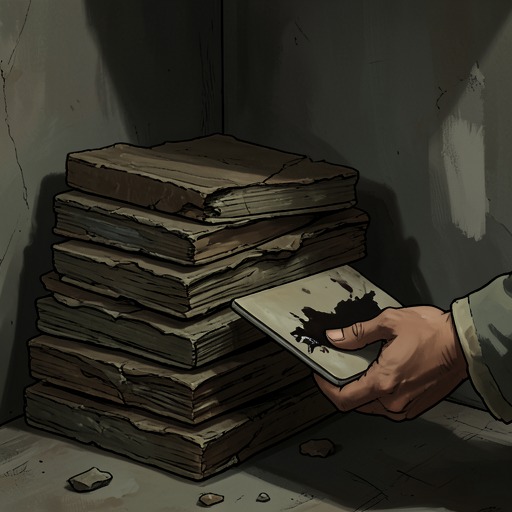
Henry Roan’s creditor note
Killers of the Flower MoonHenry Roan’s creditor note was a purported record of a debt that William K. Hale used to support a $25,000 life-insurance policy on Roan. Its amount and altered date helped investigators question Hale’s account of the debt and exposed the note as a document whose apparent authority depended on a carefully constructed chronology. In T. B. White’s investigation, it became more than paperwork: its physical traces offered a way to test the story behind Roan’s insurance and murder.
Purpose and disputed debt
Hale had initially claimed that Roan owed him $10,000 or $12,000. The amount later appeared as $25,000—the exact value of the policy Hale sought. The creditor’s note was purportedly signed by Roan and dated January 1921. That date mattered: if genuine, it would show that the debt existed before Hale began seeking insurance, lending legitimacy to his claim that he was Roan’s creditor.
The policy application itself had already raised questions. An earlier insurance company rejected Hale’s first application, and when he approached another company, he answered no when asked whether a competitor had turned Roan down. An agent later told authorities that the application’s answers were false. The note gave Hale a document to present in support of the newly enlarged debt, but the date that helped make the claim credible also gave investigators a specific feature to examine.
The altered date
Agents showed the note to an analyst at the Treasury Department known as the Examiner of Questioned Documents. Under examination, the date originally typed on the paper read June. The examiner found that someone had rubbed out the u and e, then replaced them so that the date read Jany. Slant-light photographs showed roughened, raised paper fibers around the date, signs of mechanical erasure. The alteration was not merely a discrepancy in a retold account: it had left a material trace on the document itself.
The change aligned the note with the chronology Hale needed. A June date would not establish that the supposed debt predated his insurance efforts; January 1921 would. T. B. White suspected that Hale had produced the note while trying to obtain the policy and altered it after recognizing that the date was a problem. The examination revealed the alteration, while White’s account of who made it remained an investigative conclusion rather than a fact established by the paper alone.
Evidentiary weight and limits
The note’s examination belonged to a developing field of document and handwriting analysis, methods that could be useful but were not infallible. The account sets the caution beside the promise: in 1894, Bertillon’s deeply mistaken handwriting analysis helped wrongfully convict Alfred Dreyfus of treason, while investigators in 1924 correctly identified similarities between Nathan Leopold’s typed school notes and a typed ransom note. Technical examination could supply important evidence, but it required careful judgment rather than reverence for forensic authority.
That caution matched T. B. White’s larger method. Earlier investigations into the Osage murders had accumulated leads that often rested on hearsay, uncorroborated reports, or sources whose reliability was in doubt. White sought an unbroken chain of evidence strong enough for court, not a persuasive narrative assembled from suspicion. The altered date gave investigators something concrete to test, but the note’s significance rested on how its physical evidence connected with the broader insurance effort and the evidence surrounding Roan’s murder.
A document within a manufactured story
The note also sat within an investigation in which evidence itself could be manipulated. In another line of inquiry, a witness admitted that a statement accusing Rose Osage had been written by a strange white man and forced upon her, despite her having no such confession to give. T. B. White recognized that conspirators might not only erase evidence but manufacture it. Against that background, the creditor’s note presented a different investigative problem: not simply whether a witness was repeating a lie, but whether the paper offered as proof had been altered to make a claim appear older and more credible.
The note did not, by itself, establish every part of the murder scheme. Its importance was more precise: the changed date undermined the documentary basis for Hale’s claimed debt at the same time that the inflated sum matched the insurance policy. By following the erased letters and the raised fibers back to the chronology they were meant to conceal, investigators could distinguish a recorded claim from reliable proof of the claim.